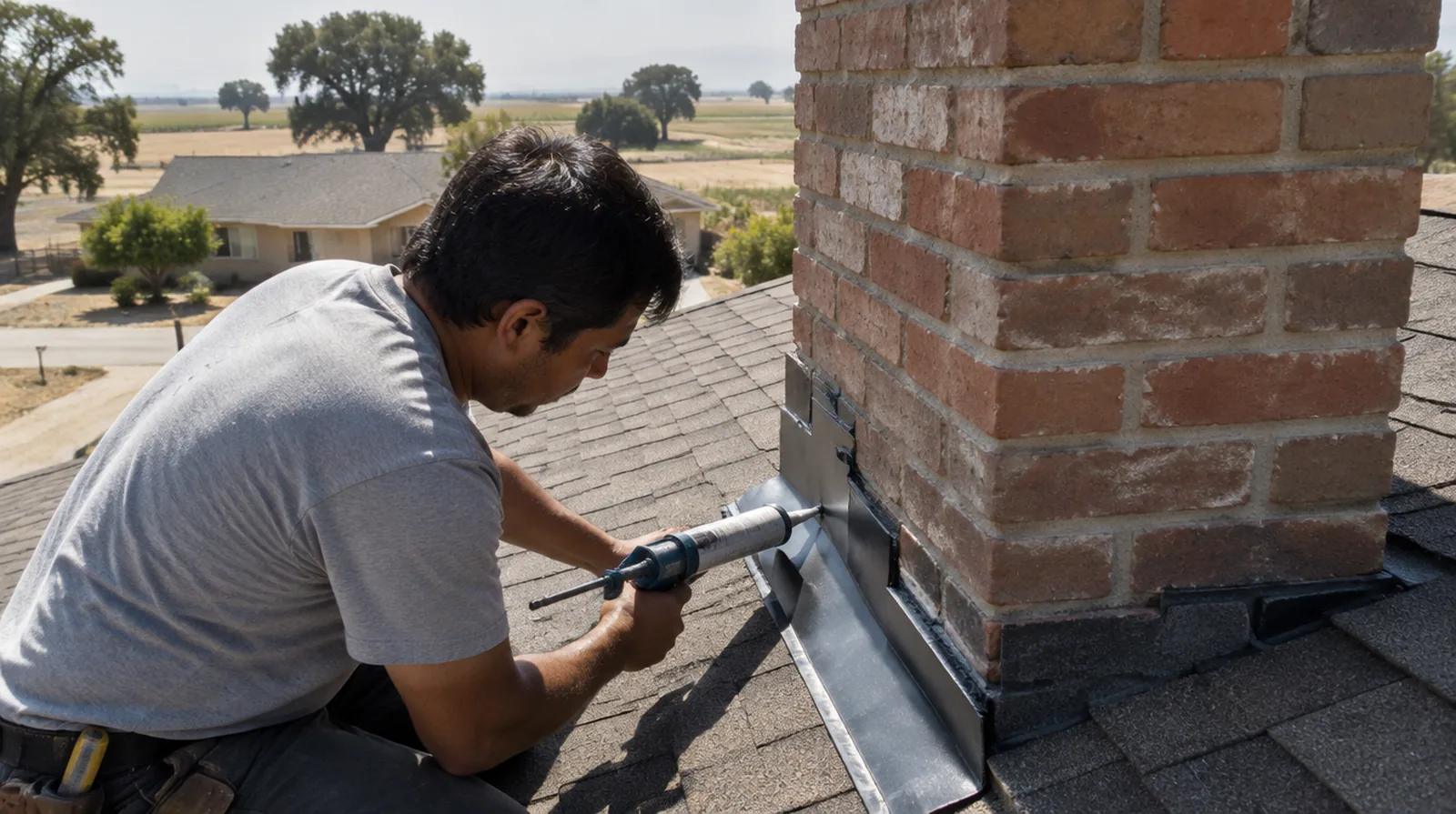
Roof leak repair is detective work
The spot on your ceiling is where the water finally dropped, not where it entered. Between those two points, it may have run along the top of a rafter, soaked across a section of insulation or slid along the underside of the deck. A leak above the hallway can start at a vent pipe near the ridge. A stain by the back door can start at the joint where the patio cover meets the house. That is why we never just dab sealant on the nearest shingle.
Our search starts indoors with the stain itself, how big it is and whether it is still wet. In the attic, we follow the tide lines and darkened wood uphill. On the roof, we check the likely culprits along that path. If it is still unclear, we run water over one small area at a time while someone watches from inside, which pins the source down precisely.
The usual suspects on Tulare homes
- Vent pipe boots. The rubber collar around plumbing vents cracks after years of sun.
- Wall flashing. Metal along stucco walls rusts out or was never tucked behind the stucco properly.
- Chimneys. Old tar patches dry, shrink and open up.
- Skylights. Seals and curb flashing wear out.
- Valleys. Dust and leaves pile up and dam water against the shingles.
- Patio covers. The ledger joint to the house is a frequent entry point.
- Solar mounts. Poorly flashed attachments leak under the panels.
Making the fix last
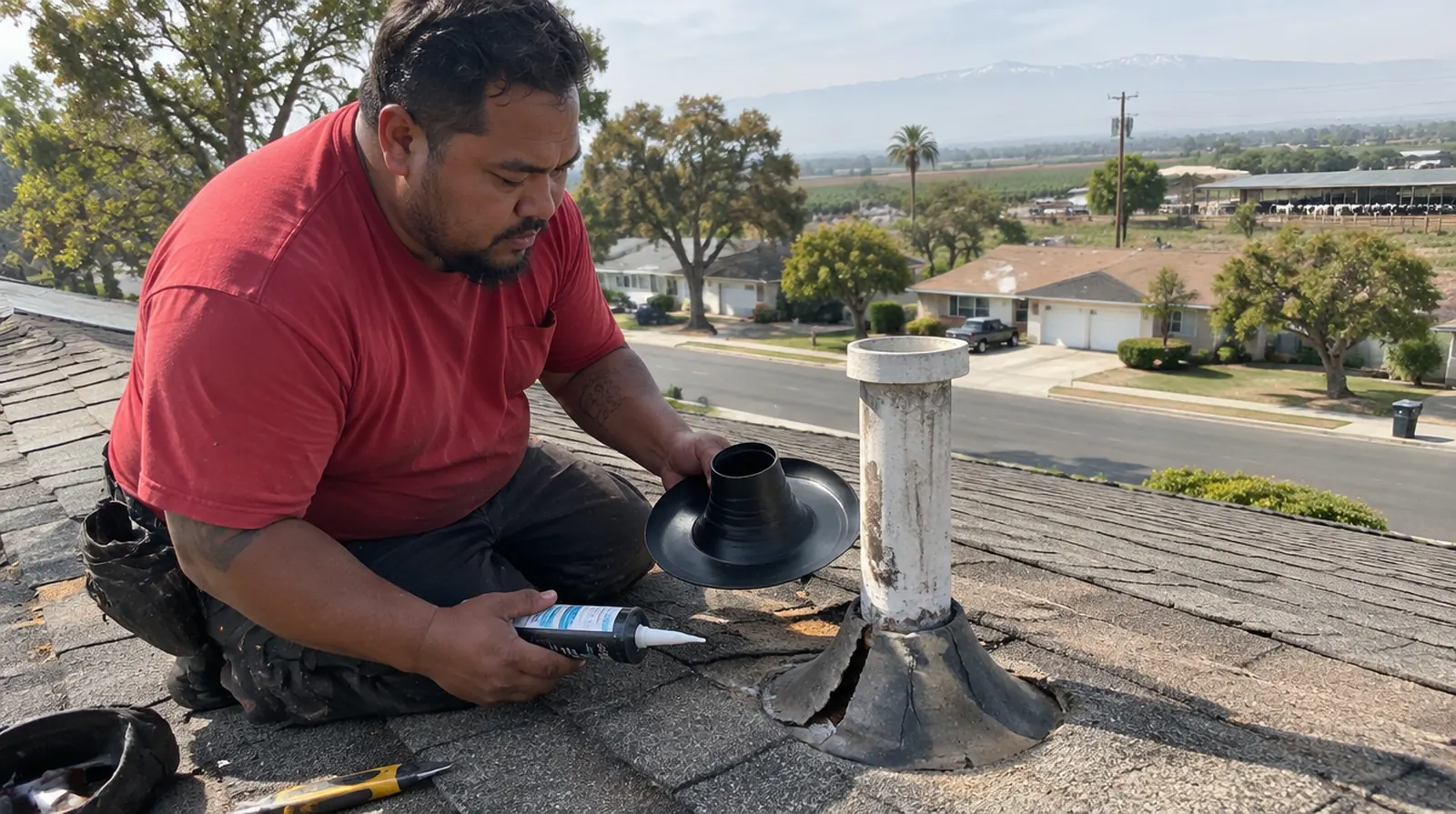
With the source confirmed, we remove the roofing around it and look at what is underneath. Wood that is damp but firm will dry once water stops reaching it. Anything soft or delaminated is cut out and replaced. Fresh underlayment goes in, then new flashing or a new boot, and finally the shingles or tile are put back or replaced to match.
We replace failed parts instead of coating them. A new boot or a rebuilt flashing detail lasts for years, while caulk in this heat can crack by next summer. When we see that the leak is one symptom of a roof that is wearing out more broadly, our roof repair service can handle the surrounding work, and we will tell you plainly if replacement is getting closer.
Why the first storm finds every weak spot
Through a long Tulare summer, nothing reveals a cracked boot or a shingle that lost its seal. Water is what exposes them, and the first real storm reaches every one of those openings at the same time. If you can, have the roof checked in early fall. It is far cheaper to replace a boot in October than to replace drywall in January.
Until we get there
Catch the drip with a bucket or towels and move anything valuable out of the way. If water is pooling above the drywall and the ceiling is sagging, a small screwdriver hole at the low point will let it drain in a controlled way. Snap a few photos and jot down when it started and how windy it was. Stay off the roof; wet shingles and tile are slippery.
How long a roof leak repair takes
Most leaks are traced and repaired in a single visit, though larger damage may need a return trip.
Roof leak repair FAQs
The leak stopped once it quit raining. Do I still need a repair?
Yes. The opening is still there, and the next storm will use it again, often with more water than before.
Is one leak a sign I need a new roof?
Not usually. Most single leaks come from one failed detail, which can be repaired on its own.
Will you fix the drywall?
We handle the roof. Once the area is dry, a drywall and paint contractor can repair the ceiling.
What if water shows up again?
Call us back. A roof can have a second entry point, and we will trace it.
Have an active roof leak?
Call (559) 461-9887 and tell us what you are seeing. We will set a time to trace it.