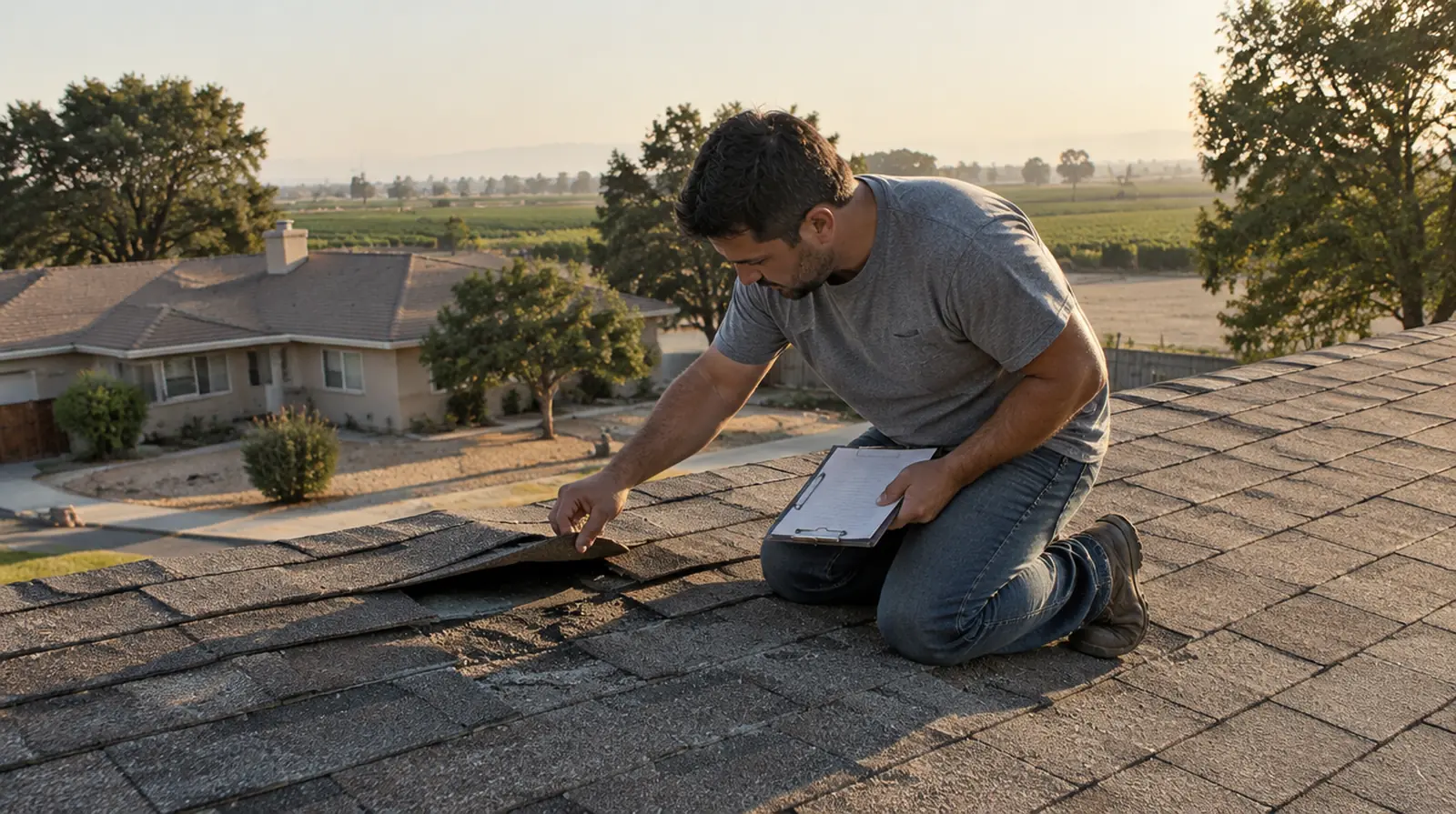
What a Tulare roof inspection includes
We inspect every slope of the roof, not just the parts you can see from a ladder. On composition shingles, we check for curling, cracking, granule loss, lifted tabs and exposed nails. On tile, we look for broken pieces, slipped tiles and ridge attachment. On low-slope sections over patios and additions, we check seams, blisters and ponding.
Flashing at walls, chimneys, skylights and vent pipes gets close attention because it is where most leaks begin. Gutters, fascia and roof edges are checked too. When the attic is accessible, we look at the underside of the deck for stains, daylight or damp spots, and we evaluate insulation and ventilation. On older homes, we note how many layers of roofing are present, since that affects remaining life and future cost.
Good times to schedule a roof inspection
- During escrow on a home purchase
- Before listing your home for sale
- In early fall, before the wet season
- After a strong windstorm
- When you notice stains, moss or granules in gutters
Inside a roof inspection visit
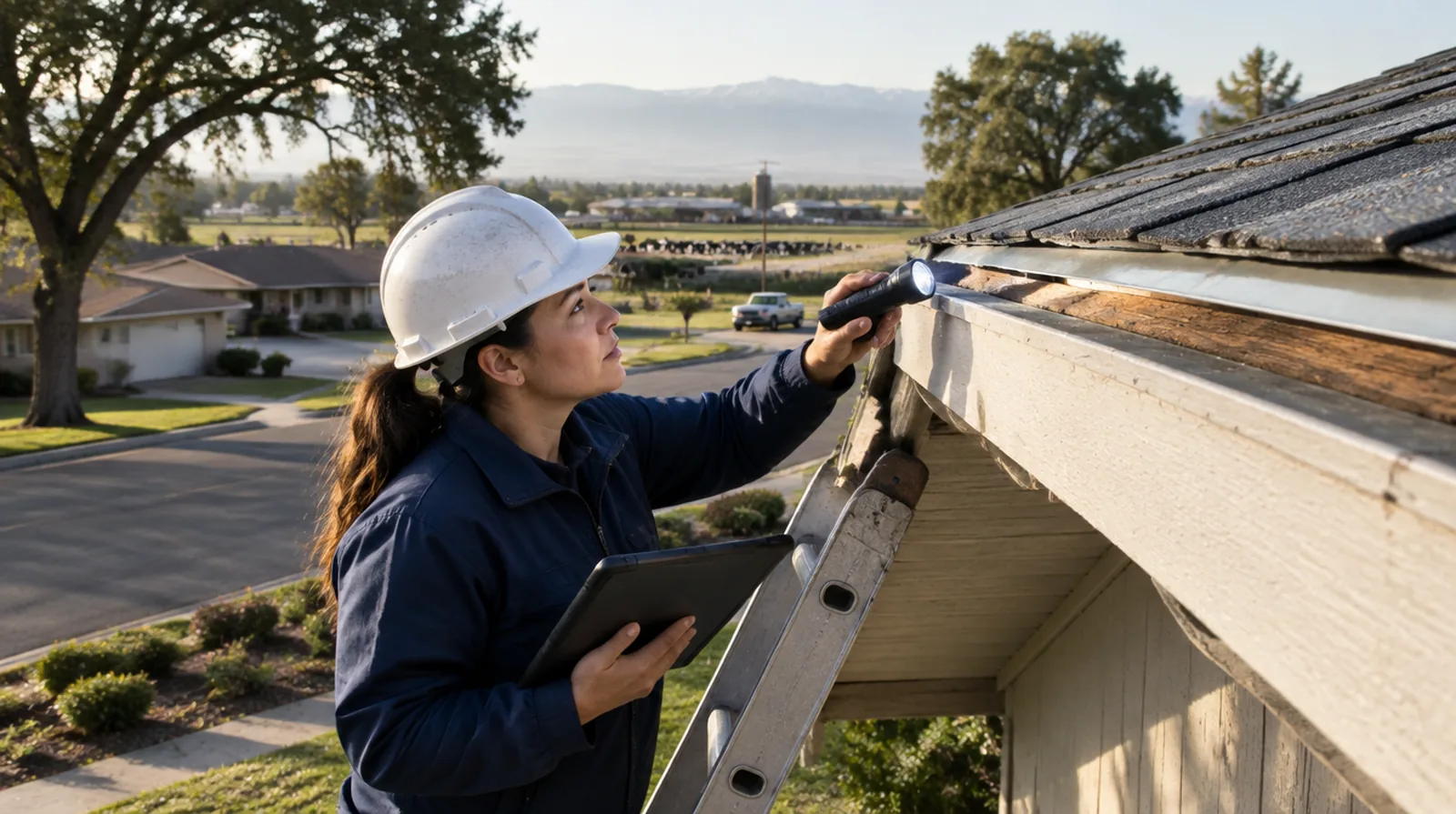
We begin with a walk around the house, getting a feel for the roof layout and spotting anything obvious from the ground. Then we go up and work through each slope methodically, photographing what we find. Inside, we check ceilings where you have seen stains and head into the attic if it is safe.
When we finish, you receive a written report with photos, grouped by urgency: items to fix soon, items to monitor, and areas in good shape. We can include a repair price if you would like one, but there is no obligation to hire us. For another perspective on what to look for, here is a useful explanation of having the roof inspected.
Why inspections pay off in the valley
Roofs here go through long, hot dry seasons followed by damp, foggy winters. Damage builds quietly during summer and often only becomes visible when rain returns. An inspection in late summer or early fall gives you time to address small issues while they are still inexpensive. For older roofs, it also helps you plan a replacement on your own timeline rather than reacting to a leak in the middle of winter.
After a windstorm, an inspection can reveal lifted or creased shingles that are hard to spot from the ground. Catching that damage early keeps water out of the deck.
Inspections for home buyers
General home inspections usually look at the roof from the ground or a ladder. A dedicated roof inspection goes further, checking the surface up close and the attic from below. For buyers, that information helps in conversations with the seller and your insurer, and it gives you a realistic idea of when you might need to budget for a new roof.
What our roof inspection report looks like
Each finding is listed with a photo, a short description and where on the roof it sits, such as the south slope above the garage or the valley over the kitchen. We flag anything that should be handled before the rainy season and note items that are simply age-related wear. Buyers often forward the report to their agent; sellers sometimes use it to fix a few small things before listing so they do not become sticking points.
How often to have the roof checked
For a roof in its middle years, every two or three years is reasonable. Once it is older, or after any big wind event, yearly checks make sense.
Roof inspection FAQs
How long does an inspection take?
About an hour for a typical single-story home. Larger roofs take longer.
Should I be home?
It helps but is not required. If you are there, we can show you photos as we go.
Do you check the attic?
Yes, when there is safe access. The attic often reveals what the roof surface hides.
Can you inspect around solar panels?
Yes. We check mounts and nearby roofing, though we do not move the panels.
Want a clear read on the roof?
Call (559) 461-9887 to schedule a roof inspection in Tulare.