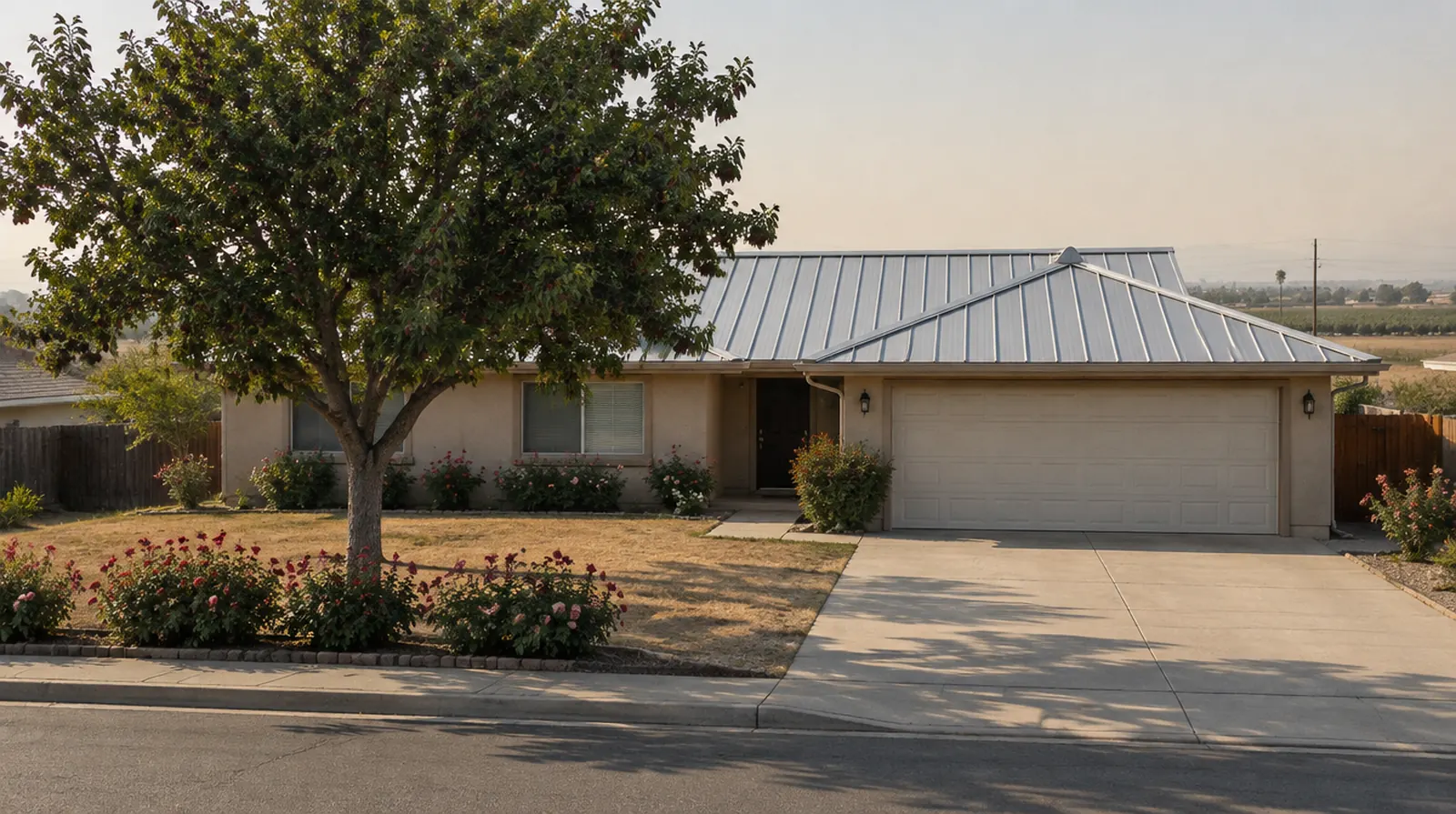
Why metal makes sense in the south valley
Tulare sits on the floor of the San Joaquin Valley, where the ground is flat, the summers are long and the rain is scarce. Asphalt shingles take a beating here. The sun bakes the oils out of them, granules wash into the gutters, and a 25-year shingle can look tired well before that. Metal does not dry out. A factory-coated panel holds its color for decades, and reflective finishes keep the roof deck cooler during the long run of days over 90 degrees.
The weather shifts in winter. From roughly November through March, tule fog can sit over town for days, keeping roofs damp and cold. Metal sheds that moisture quickly, and with the right underlayment, condensation stays off the deck.
Who calls us for metal
- Homeowners in the 1970s through 1990s ranch neighborhoods who are on their second or third shingle roof and want this one to be the last.
- Families in newer subdivisions on the north and west sides who want a cooler upstairs and lower summer bills.
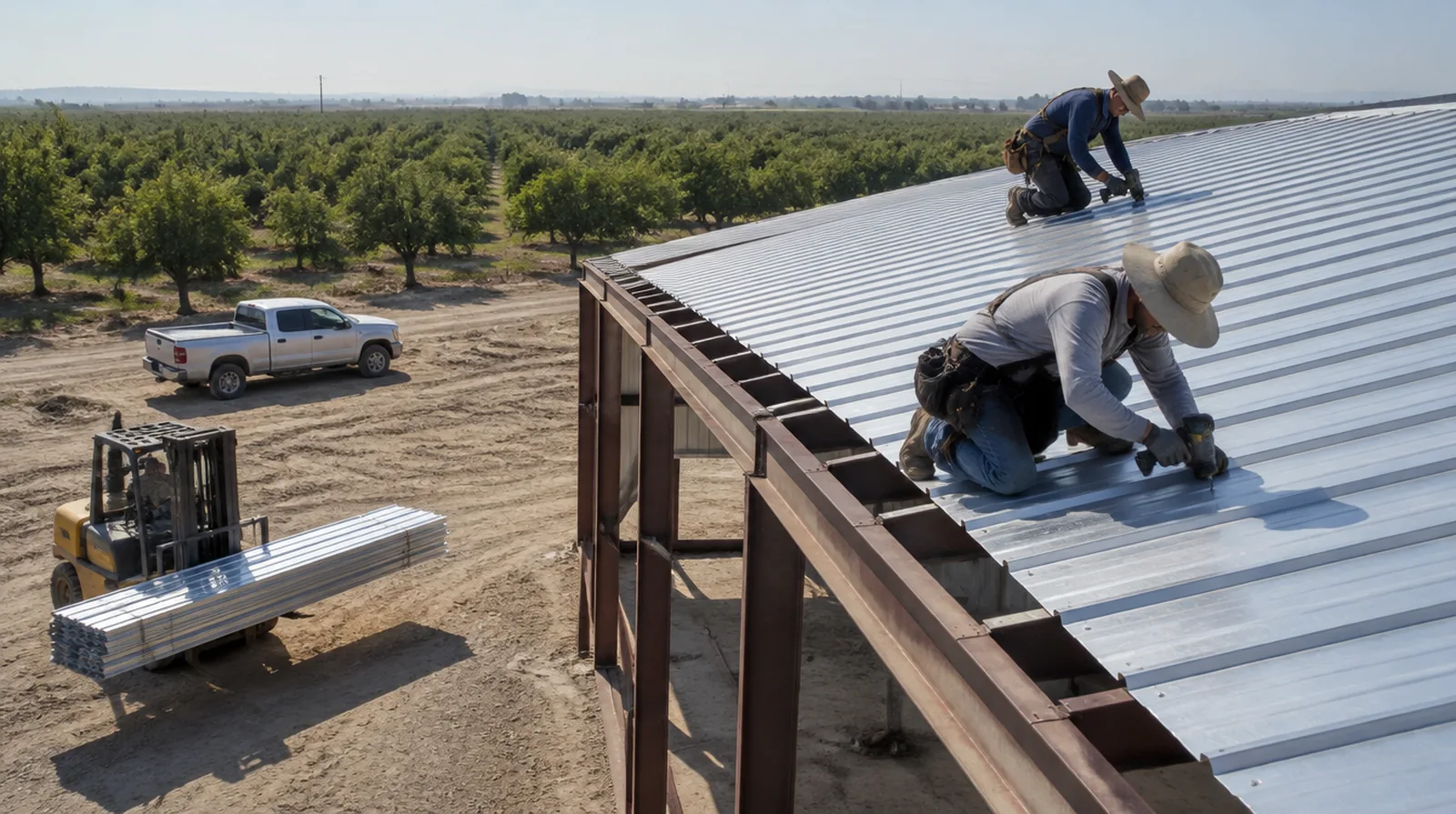
- Farm and dairy owners outside town who need shops, hay barns, equipment sheds and calf barns roofed or re-skinned.
- Small businesses along the Highway 99 frontage with metal buildings that have rusted screws and leaking laps.
Panel types we install
Standing seam is the usual pick for houses. The fasteners hide under raised seams, so there are no exposed screws to back out as the panels expand and contract between a 100-degree afternoon and a 60-degree night. It reads clean and modern on a low ranch roofline.
Exposed-fastener ribbed panels cost less per square foot and are common on shops, barns and carports. We use screws with sealing washers and set them in the flat of the panel, not the rib, so they seal properly. On older ag buildings, we often go over the existing purlins after checking them for rust and sag.
Stone-coated steel looks like shingle or tile but weighs a fraction of concrete tile. It suits homeowners whose HOA or own taste calls for a more traditional look.
Color and heat
Color is more than looks in Tulare. Light grays, tans, whites and some cool-pigment darker colors carry high solar reflectance ratings. A roof that reflects more of the sun heats less, which helps the attic and the air conditioner. California's Title 24 energy rules set cool-roof standards on many reroofs, and we choose panels and finishes with ratings that meet them. We will show you actual color samples outside, in valley light, before you choose.
Dust, air quality and coatings
Farm dust and Highway 99 traffic leave a film on every roof in town. On shingles it dulls everything. On a smooth painted metal panel, the winter rains rinse most of it off. For dairies and buildings near livestock, ammonia in the air can attack bare metal, so we recommend a premium paint system or a specific coated panel built for agricultural exposure.
How the install works
- Inspection. We check the deck, rafters and attic ventilation. Ventilation matters because a hot, stuffy attic stays hot no matter what is on top.
- Tear-off or overlay. On houses, we usually remove old shingles so we can inspect and repair the plywood. Some shops can take panels directly over the old roof on new furring.
- Underlayment. A high-temperature synthetic underlayment goes down first. It handles the heat beneath dark panels and protects against fog-season condensation.
- Panels and trim. Panels are cut to length, and we flash every wall, chimney, vent pipe and skylight with matching metal trim.
- Walkthrough. We clear metal shavings off the roof so they do not rust-stain the finish, run a magnet over the yard for screws, and walk the job with you.
Solar on a metal roof
Many Tulare homeowners add solar. Standing seam is ideal for it, because clamps grip the seams without drilling into the roof. If panels are in your plans, mention it so we can lay out the seams to suit the array.
What it costs
Metal costs more upfront than shingles. The price depends on roof size, panel type, pitch, how many valleys and penetrations the roof has, and whether we tear off. Many owners find the long life, lower cooling load and fewer repairs close that gap over time. We price each job after measuring, and the written quote spells out panel gauge, finish and trim.
If the roof needs work sooner, our roof repair crew can keep it going, and a roof inspection will tell you how much life is left before you decide.
Ready to price a metal roof?
Call (559) 461-9887 and tell us what you want to cover. We will measure the roof, look at the framing and give you a written price.