Roofs that keep the Valley working
Tulare is one of the hubs of California dairy country, and the International Agri-Center brings the World Ag Expo here every February. That farm economy shapes the city's commercial buildings. Along with downtown storefronts, offices, churches and retail centers, there are equipment shops, feed and seed buildings, packing sheds, cold storage, processing plants and big pole barns. Each type has its own roof, and each has its own failure points.
We work with owners and managers who need a roof that keeps product, equipment and people dry, with as little downtime as possible.
Systems we install and repair
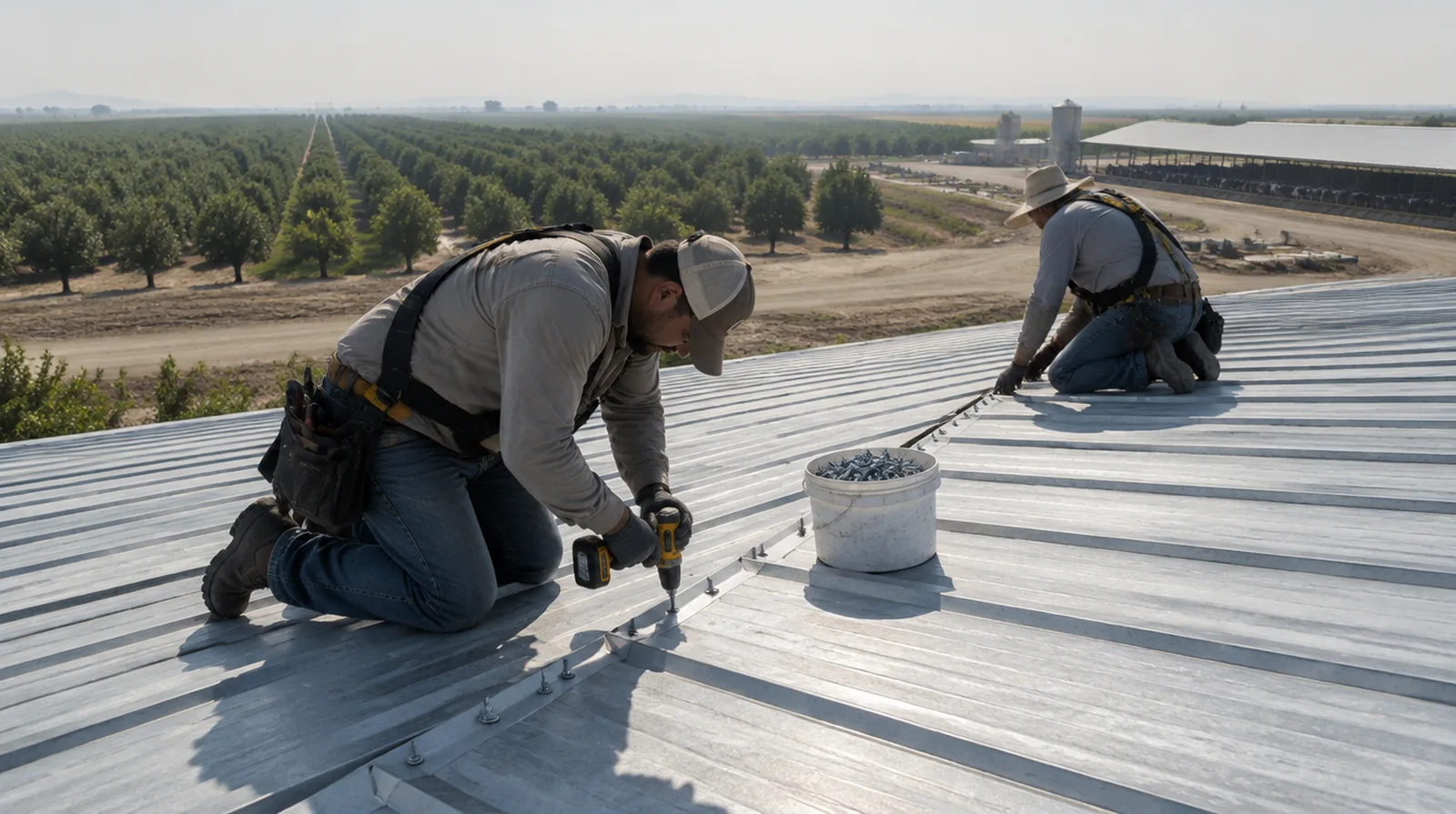
- Metal roofs. Through-fastened and standing seam panels on shops, barns and warehouses. We replace failing fasteners, reseal laps and ridge caps, treat rust and install new panels.
- TPO and PVC. White single-ply membranes for flat and low-slope roofs on retail, offices and processing buildings.
- Built-up and modified bitumen. Common on older downtown buildings. We repair them or replace them with a new system.
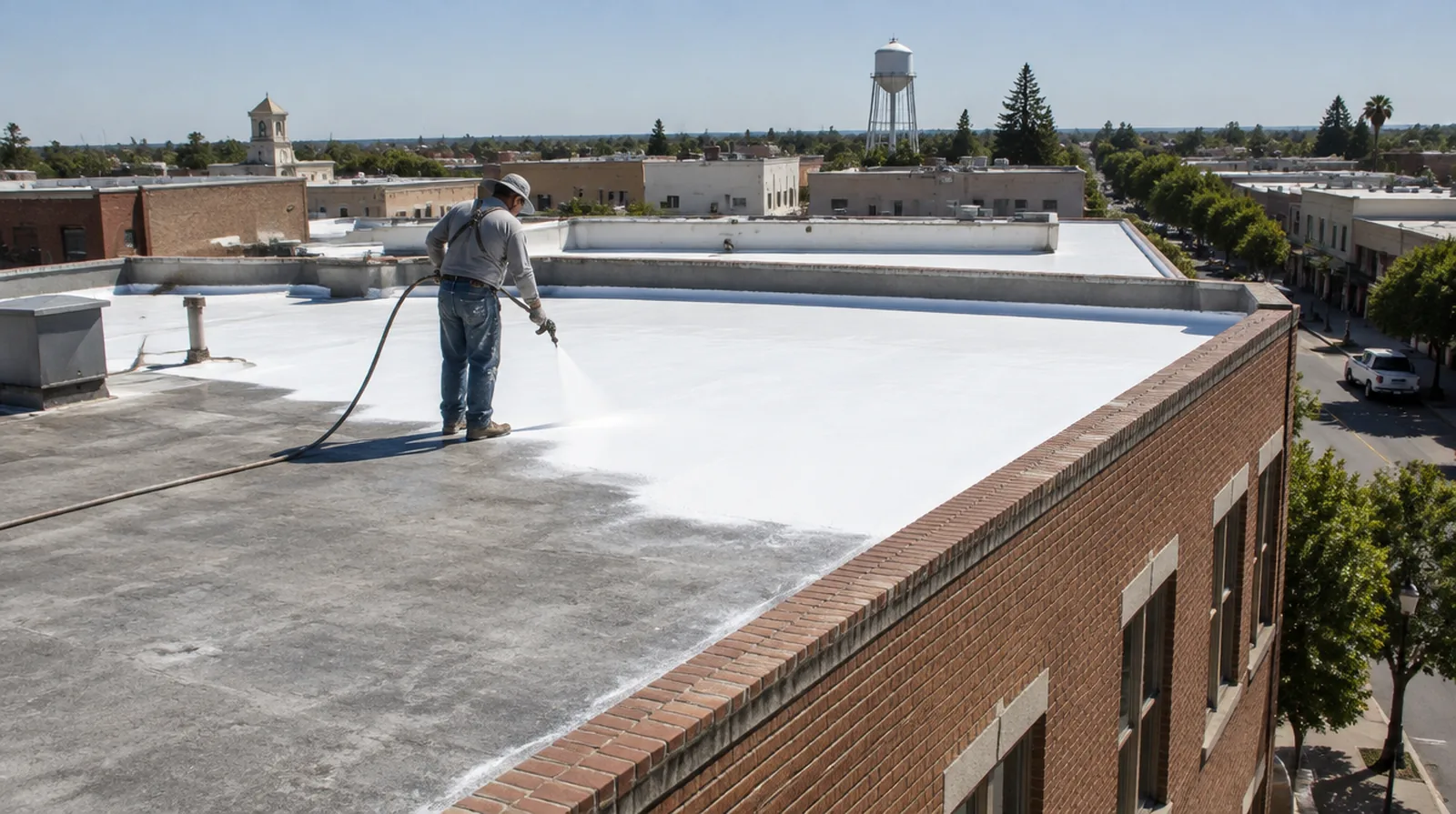
- Coatings. Silicone and acrylic coatings over metal and flat roofs to stop leaks and cut heat gain.
Southern San Joaquin Valley conditions
Tulare summers are long and hot, with many days over 100 degrees. Metal panels expand and contract every day in that heat, and over the years that movement loosens screws and wears out the rubber washers under them. Each failed washer becomes a small leak. Asphalt roofs dry out and crack, and dark roofs drive up the cooling load, which matters a lot for cold storage and offices.
Winter brings a different problem. Rain is light compared with the coast, but tule fog can sit over the valley for days, keeping roofs damp. Condensation under metal roofs drips into buildings that have little or no insulation. Dust from fields and dairies builds up in gutters and on flat roofs, then turns to mud in the first storm and plugs drains.
Fixing it the right way
Inspection first. We walk the roof, check fasteners, seams, flashings, curbs and drains, and look for moisture under flat systems. You get photos and a written summary.
Repair handles specific problems, such as a run of failed screws, a torn seam or a leaking skylight panel.
Restoration coatings make sense when the roof structure and panels are sound but the surface is wearing out. On metal, we clean, treat rust, seal seams and fasteners and then coat the whole roof. On flat roofs, a coating can extend the life of a dry, well-attached membrane.
Replacement is the answer when the roof is wet through, badly rusted or past saving. California's Title 24 energy rules set cool roof requirements for many commercial reroofs, and we design to meet them.
Keeping operations running
A packing shed in harvest season or a dairy barn full of cattle cannot close for a roof. We plan work in phases, schedule around your busy season and keep debris away from product and animals. For food and cold storage buildings, we take extra care with dust and debris control inside. Our crews work early in the morning in summer, both for safety and to avoid the worst heat on the roof.
Maintenance that pays off
A simple twice-a-year visit catches most problems early. In fall, before the rains, we clear gutters, drains and scuppers, check fasteners and seal small openings. In spring, we check for winter damage and plan any work before the heat arrives. Ask about adding roof inspections and metal roofing work to your maintenance plan.
Common questions
Can you coat a rusty metal roof? Often, yes, as long as the panels are still solid. We clean and treat the rust first so the coating bonds.
Can you help with condensation dripping inside? Yes. We look at ventilation, insulation and the roof assembly and suggest fixes.
Do you serve nearby towns? Yes, including Visalia, Tipton, Pixley and Lindsay.
Talk to us about your building
Call (559) 461-9887. We will inspect the roof and give you a written report and price.