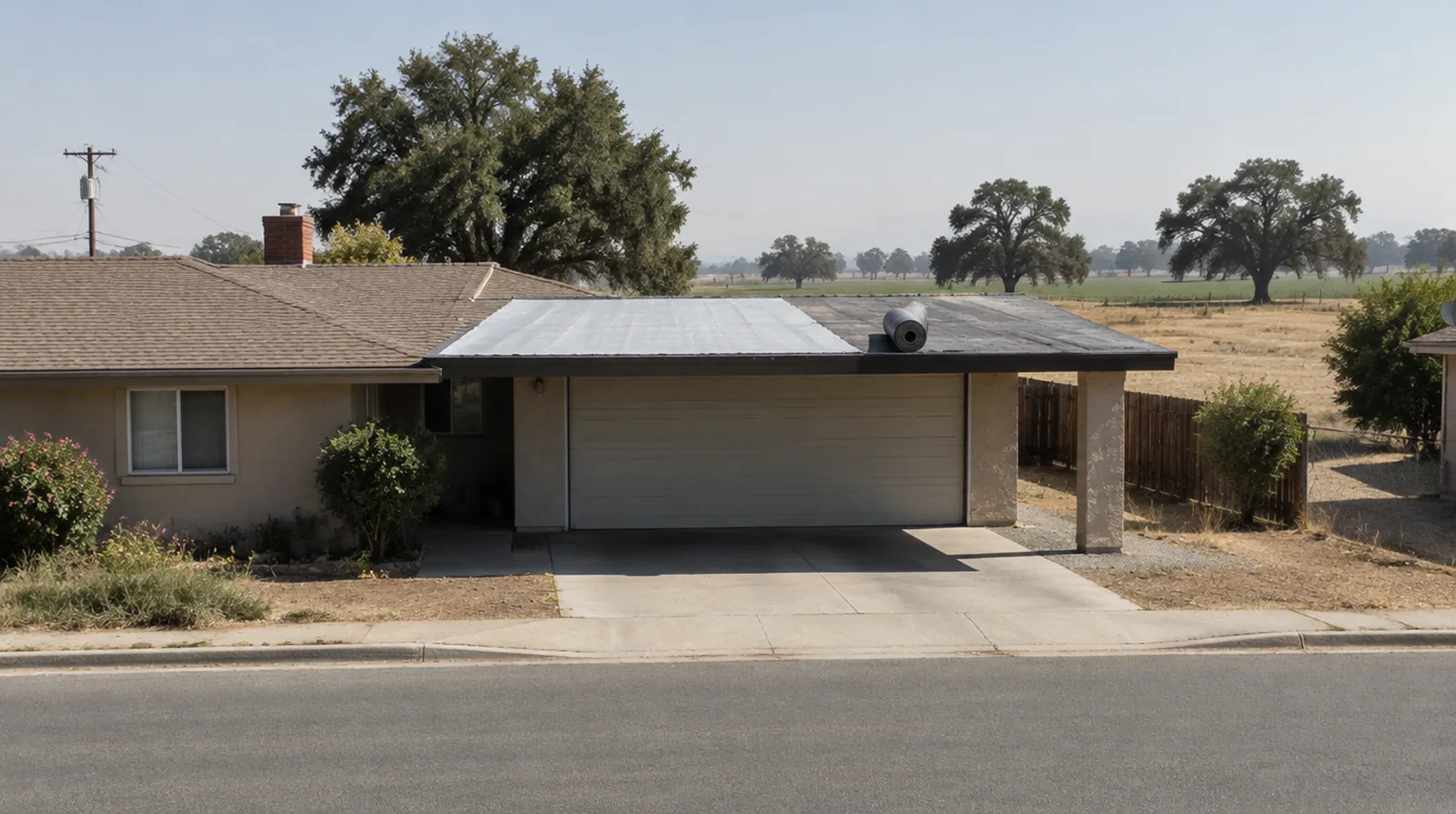
Where flat roofs show up around Tulare
Drive the older blocks east of the tracks or the ranch-home streets near Prosperity Avenue and you will notice how many houses have a nearly level roof tucked behind them. Some cover a converted garage, some shade a back patio, and some sit over a family room that was added on in the 1970s or 80s. Carports and small commercial buildings downtown use them too. What they have in common is that rain does not run off quickly. It creeps toward an edge or a drain, and every dip, every clogged scupper and every tired seam is a chance for it to settle in.
The valley sun is the other half of the story. Rolled roofing and older cap sheets shed their granules, coatings chalk and craze, and membranes lose flexibility. By the time fog season arrives, a surface that looked fine in June may have dozens of hairline cracks.
Is your low-slope roof asking for flat roof repair?
Take a look from a ladder or an upstairs window after the next rain. Things worth noting:
- Water sitting in the same spot two days later
- Bubbles or soft, spongy areas when pressed
- Edges of the membrane curling up from the drip edge
- Dark, bare patches where the protective surface has worn off
- A brown ring on the patio ceiling or in the added room
Our flat roof repair method
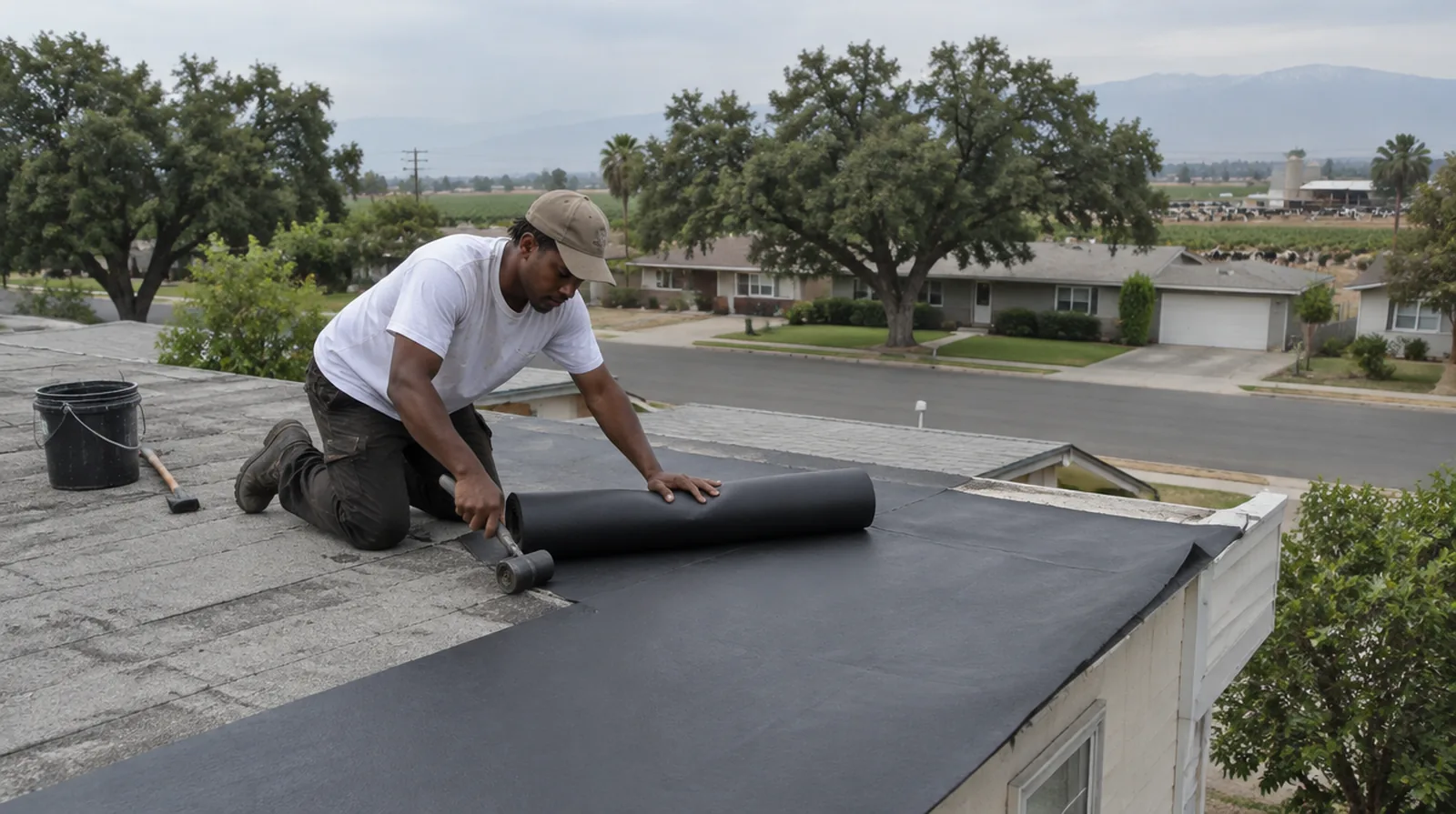
Step one is diagnosis. We walk the surface, probe for wet insulation or soft decking, and check every edge, drain and wall joint. The goal is to separate the actual failure from the symptoms around it, because a stain in the middle of a ceiling might come from a wall flashing six feet away.
Step two is the fix. Damaged membrane is cut back to sound material and the area is cleaned and dried. A compatible patch is installed with overlaps on every side, and seams are rolled tight. At walls and at the point where a patio roof tucks under the main roof edge, we replace the flashing so upper runoff is carried onto the flat surface instead of behind it.
Step three is honesty about the big picture. If the membrane is cracking everywhere, a patch only moves the next leak somewhere else, and we will give you a replacement price to compare.
Getting rid of standing water
Ponding wears a membrane out years early. The usual causes are a deck that has sagged between joists, a drain that sits a little proud of the surface, or a scupper that is simply too small. Shimming in tapered insulation, resetting a drain or cutting a larger outlet can solve it for good, which is better than patching the same low spot every winter.
Patio covers attached to the house
Many Tulare patio covers hang from a ledger board bolted to the house wall. When the flashing over that ledger fails, water gets into the wall framing as well as the patio roof. Each time we work on one of these covers, we check the ledger, the beam ends and the posts, and we tell you if the framing needs a carpenter's attention.
Keeping the space below cooler
Rooms under a dark flat roof can be brutal in July. A white or light cap sheet, or a reflective coating over a sound membrane, cuts the heat soaking into that room and slows UV damage. It is an easy add-on when we are already up there.
Flat roof repair FAQs
Is roof coating a repair?
Not by itself. A coating protects a healthy surface, but split seams, wet insulation and drainage problems must be fixed first.
How quickly can a patch be done?
A typical seam or puncture repair is a single visit, weather permitting.
My addition has gravel on top. Can you still help?
Yes. We clear the gravel at the problem spot, repair the layers beneath and put it back, or recommend a new membrane if the old system is worn out.
Can you replace only the patio roof?
Yes, and we tie the new section into the house so the joint stays dry.
Have a low-slope leak?
Call (559) 461-9887 for a free flat roof repair look.