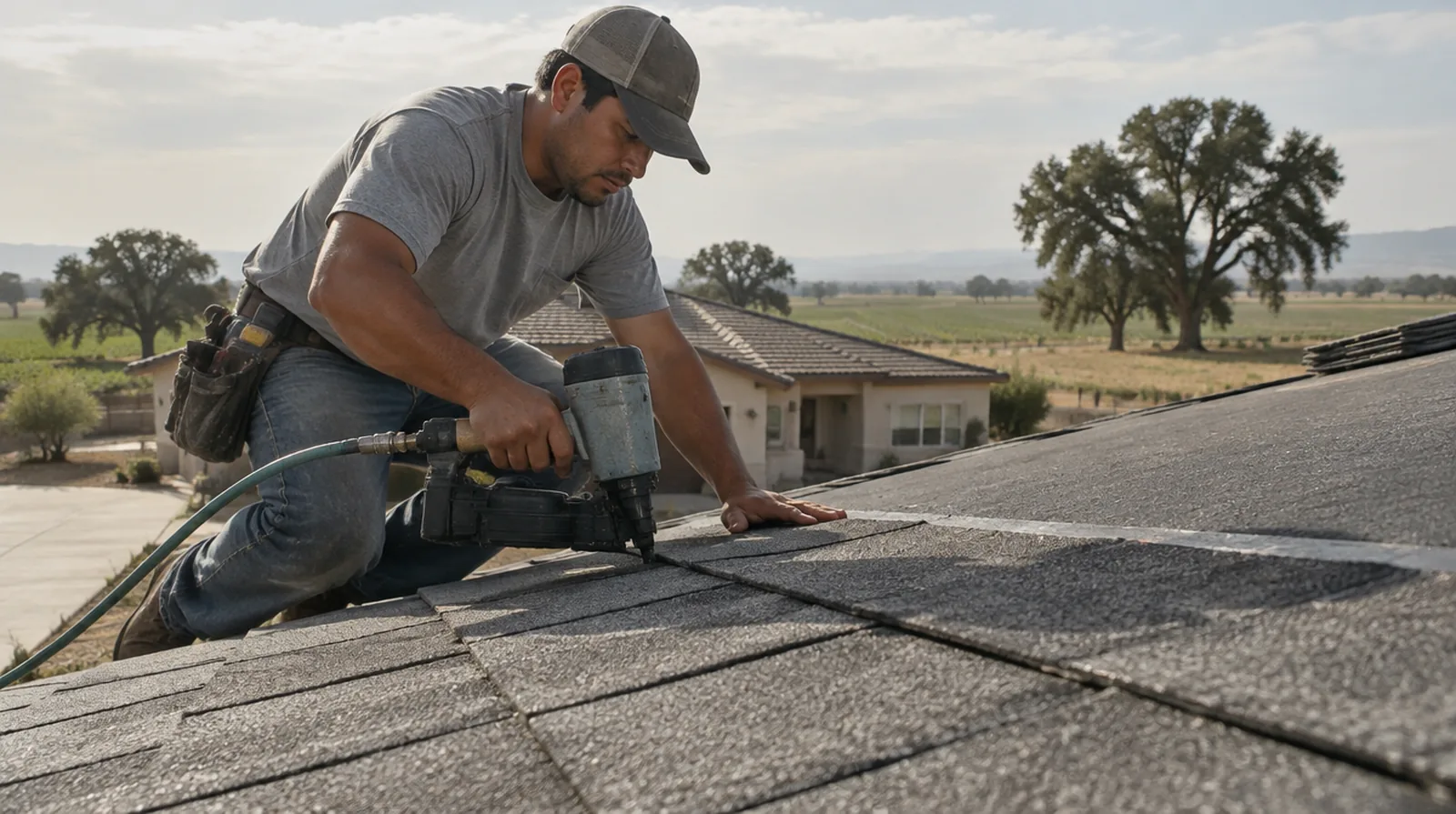
Why asphalt shingle roofing works for Tulare homes
Shingles are light compared with tile, which suits the framing of older ranch and postwar homes. They work across a wide range of roof pitches, install efficiently and are easy to repair if a section is damaged later. Architectural shingles, with their thicker layered design, give a long, low roofline more depth and generally handle wind better than older three-tab styles.
The challenge is heat. Shingles here endure months of intense sun, plus heat rising from the attic below. How the roof is built makes a major difference in how long it lasts.
How we install a shingle roof
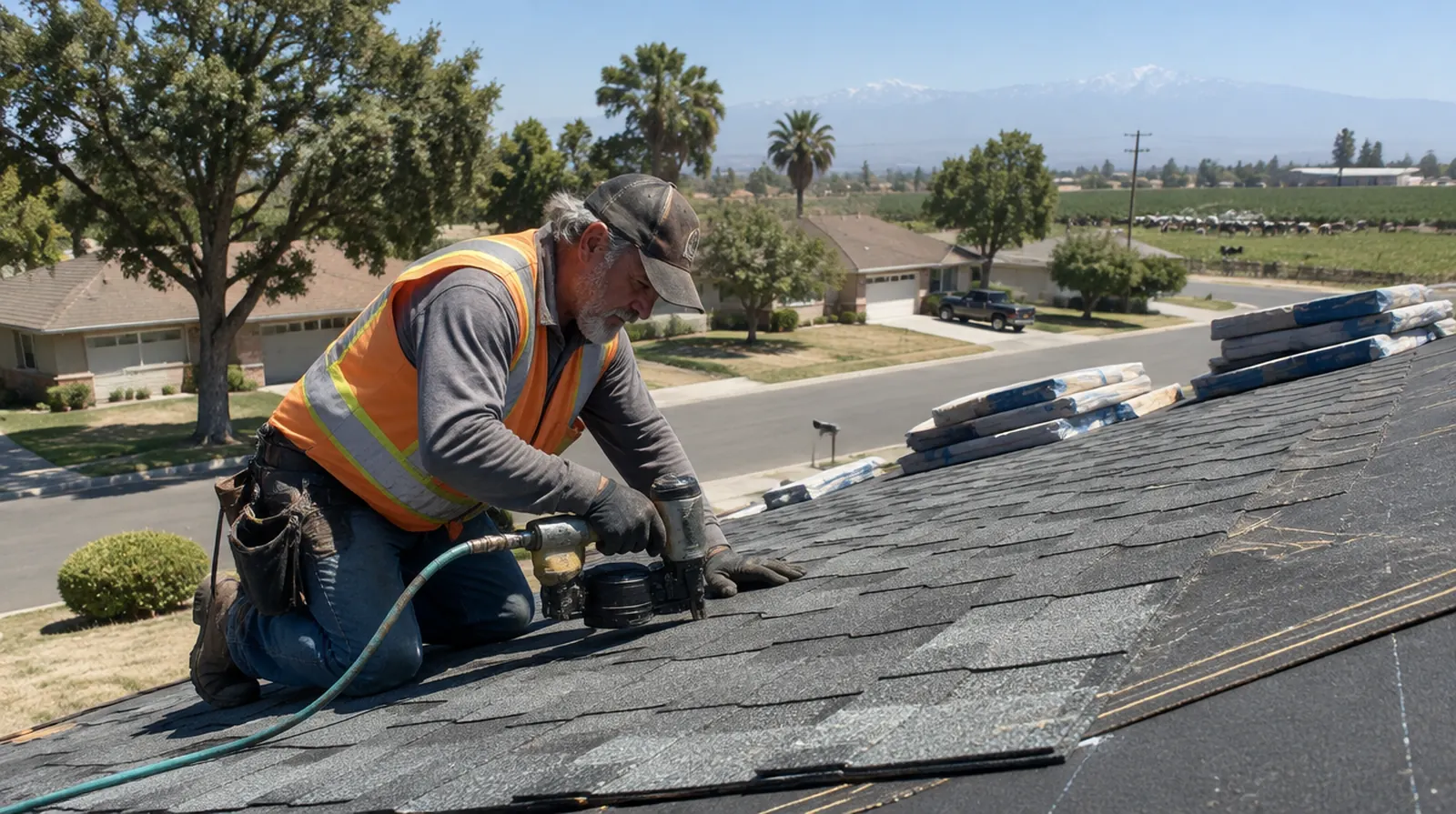
We remove all existing roofing down to the deck, including any extra layers. Damaged wood is replaced, and on older homes with plank decking, we may add new sheathing so shingles have a smooth, solid base. Then we install underlayment over the entire roof, with drip edge along the eaves and rakes and metal in the valleys.
Starter shingles go down along the edges so the first course seals well and resists wind. Each course is laid straight and nailed according to the manufacturer's specifications. Step flashing is installed at walls, new boots go around vent pipes, and ridge caps finish the peak, often over a continuous ridge vent. If only part of your roof needs attention, our roof repair service may be enough.
Helping shingles last in the heat
A hot attic is one of the biggest reasons shingles wear out early here. Without good airflow, the deck can get far hotter than the outside air, drying shingles from below. Pairing a new roof with balanced roof ventilation helps them reach their expected life.
Color matters too. Lighter and reflective shingles absorb less heat, and some product lines are designed to meet California cool roof requirements. We bring samples so you can see them in daylight next to your stucco and trim.
- Clear dust and leaves from valleys and gutters before the rains
- Trim branches that rub the roof
- Check for lifted tabs after windstorms
- Replace cracked vent boots promptly
Choosing a shingle line
Shingle lines vary in weight, thickness, wind performance and appearance. Heavier architectural shingles generally hold up better in wind and offer more texture. Some lines include algae-resistant granules, which can help on shaded slopes that stay damp through fog season. We walk you through the options and help you choose what fits your home and budget.
Shingle roof cost factors
- Roof size and pitch
- Shingle line and color
- Layers removed and deck repairs
- Flashing and ventilation work
Every estimate is written and includes disposal.
Asphalt shingle roofing details that hold up to valley wind
Most wind damage begins at the edges of a roof. That is why we use adhesive starter strips at both the eaves and the rakes, keep every nail inside the manufacturer's nailing zone, and fasten ridge caps securely. On homes at the edge of town where gusts come across open fields, these details make a real difference after a strong front blows through.
Matching shingles on additions and garages
If you are re-roofing a detached garage, a workshop or an addition rather than the whole house, we bring samples and find the closest color and style match to the main roof. You will see the match in daylight before anything is ordered.
Asphalt shingle roofing FAQs
Can new shingles go over old ones?
We recommend full tear-off. Layering adds weight, traps heat and hides deck damage.
Will a lighter shingle make my home cooler?
It can help reduce attic heat, especially combined with good ventilation.
Do I need a permit?
Yes, a re-roof typically requires one. We handle it.
How long does installation take?
Most homes take a few days, depending on size and weather.
Ready for new asphalt shingles?
Call (559) 461-9887 for a free asphalt roofing estimate.